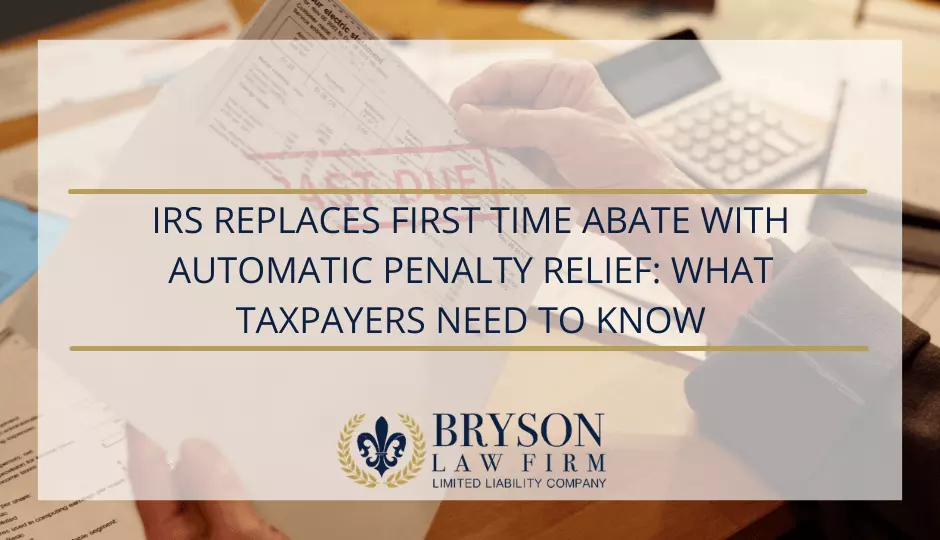

For years, taxpayers with a strong compliance history have had access to an important form of penalty relief known as First Time Abate (FTA). The problem is that the relief wasn't automatic. Taxpayers and their representatives had to know it was available and request it from the IRS. Under a new IRS initiative, that relief will now be applied automatically in many cases.
The IRS recently announced a new Automatic Exemption from Penalty (AEP) program that will automatically provide penalty relief to many eligible taxpayers, eliminating the need to request First Time Abate in many situations. The change is intended to simplify the penalty relief process and reduce unnecessary administrative burdens for taxpayers who have consistently met their tax obligations.
What Is Changing?
Beginning in summer 2026, the IRS will begin implementing Automatic Exemption from Penalty (AEP) for eligible returns.
Rather than assessing certain penalties and waiting for taxpayers or their representatives to request relief, the IRS will automatically determine whether a taxpayer qualifies based on their compliance history. If they do, the penalties simply will not be assessed. Eligible taxpayers will also receive a notice confirming that the relief was applied.
Which Penalties Are Covered?
AEP applies to three of the most common IRS civil penalties:
· Failure-to-file penalties,
· Failure-to-pay penalties, and
· Failure-to-deposit penalties.
The relief applies only to these penalties. It does not eliminate any tax owed, accrued interest, or penalties that are outside the scope of the program.
Who Qualifies?
Eligibility is based on a taxpayer's recent compliance history. Generally, taxpayers qualify if they have timely filed returns for the previous three tax years and timely paid any tax due during that same period. For quarterly filers, the IRS will instead look at the previous 12 consecutive quarters.
The program is expected to apply to:
· Original income tax returns for tax year 2025 and later,
· Quarterly returns beginning in 2026, and
· Future eligible filing periods.
Not every return qualifies. Certain returns filed only for specific events—such as estate tax returns (Form 706) and gift tax returns (Form 709)—are generally excluded, as are many information returns.
What Happens to First Time Abate?
The IRS will begin phasing out FTA during the transition to AEP. As the new system is implemented, some taxpayers may still receive penalty notices for eligible 2025 returns or 2026 quarterly returns before the automatic process is fully operational.
During this transition period, taxpayers who believe they qualify may still request First Time Abate if penalties have already been assessed.
Beginning with eligible returns that have original due dates on or after January 1, 2027, AEP is expected to replace First Time Abate for returns covered by the new program.
What If You Don't Qualify?
Not receiving automatic relief does not necessarily mean penalties cannot be removed.
Taxpayers may still request penalty abatement based on reasonable cause, which remains a separate form of administrative relief. Reasonable cause requests require the taxpayer to demonstrate that circumstances beyond their control prevented timely compliance.
Examples may include:
· Serious illness,
· Natural disasters,
· Destruction of records, and
· Other events that made compliance impossible or impracticable.
Unlike AEP, reasonable cause relief is not automatic and requires the IRS to evaluate the facts and supporting documentation.
Why This Matters
For taxpayers, this is a welcome simplification. Many people who qualified for First Time Abate never received it simply because they were unaware it existed or did not know they needed to request it. Automatically applying relief should reduce unnecessary notices,
save taxpayers time, and decrease the number of administrative penalty abatement requests the IRS must process.
Need Help Determining Whether You Qualify?
The IRS's move toward automatic penalty relief is a positive development. It rewards taxpayers who have established a history of compliance without requiring them to navigate another administrative process.
That said, penalty relief remains highly fact-specific. AEP does not replace reasonable cause relief, nor does it apply to every type of return or every penalty.
Whether you've received an IRS penalty notice or want to understand your options before responding, our tax resolution attorneys can review your IRS account, determine whether you qualify for Automatic Exemption from Penalty, First Time Abate, or reasonable cause relief, and help you pursue the best available resolution. Contact Bryson Law Firm today to schedule your free consultation.